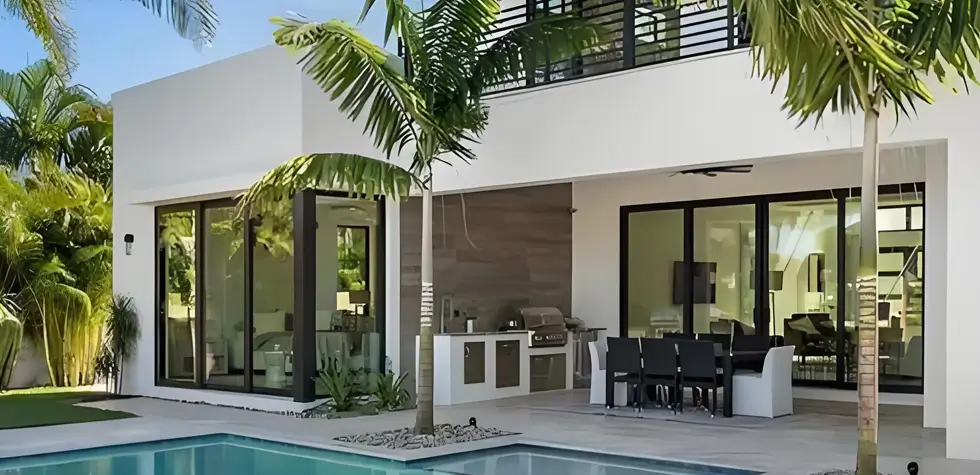
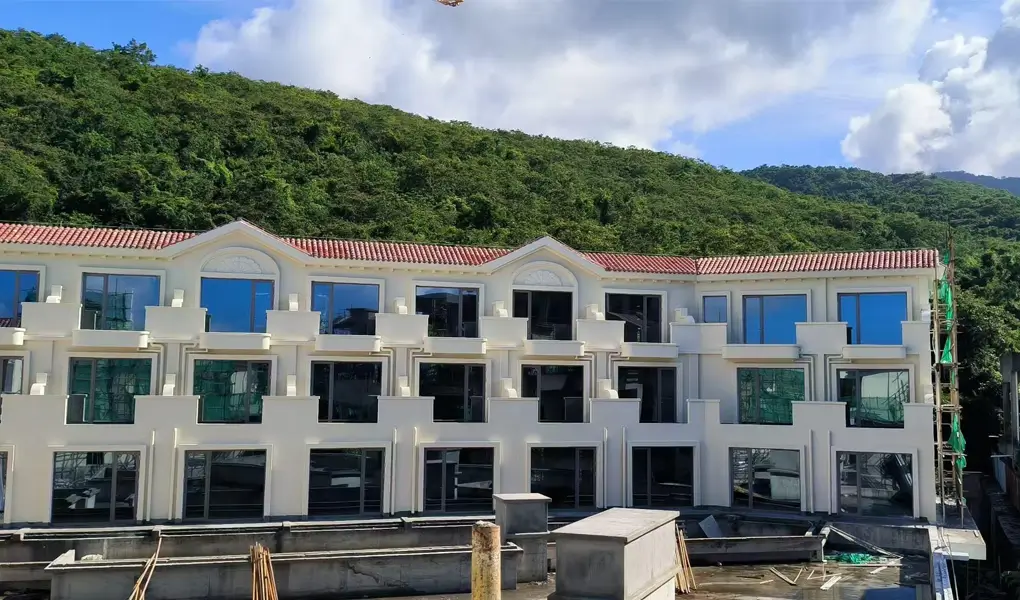
Why Coastal Villas Use Fluorocarbon Aluminum & Coated Glass: Salt Resistance & UV Protection
Coastal villas face extreme corrosion from high salt content and intense UV radiation. Fluorocarbon surface-treated aluminum and coated glass address these pain points with proven performance, backed by test data.
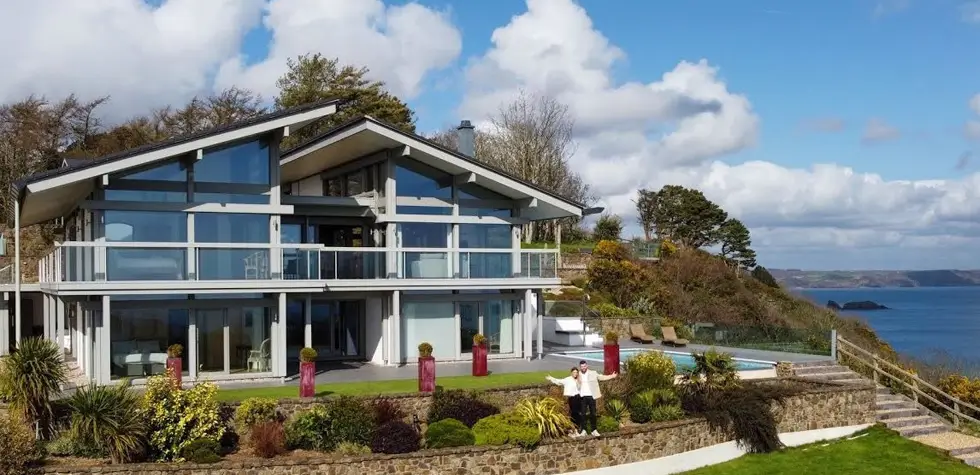
1. Fluorocarbon Aluminum: Superior Salt Alkali Corrosion Resistance
Coastal air has 3-5x higher salt content (35-50mg/m³) than inland areas and often faces strong winds and heavy rains. Fluorocarbon (PVDF) coated 6063-T5/T6 aluminum passes 3000-hour neutral salt spray tests (ASTM B117), resisting rust and peeling for 20+ years—60% longer than ordinary powder-coated aluminum. Its tight coating film also enhances wind and rain tightness, with a wind pressure resistance of ≥2.5kPa, effectively preventing rainwater infiltration.
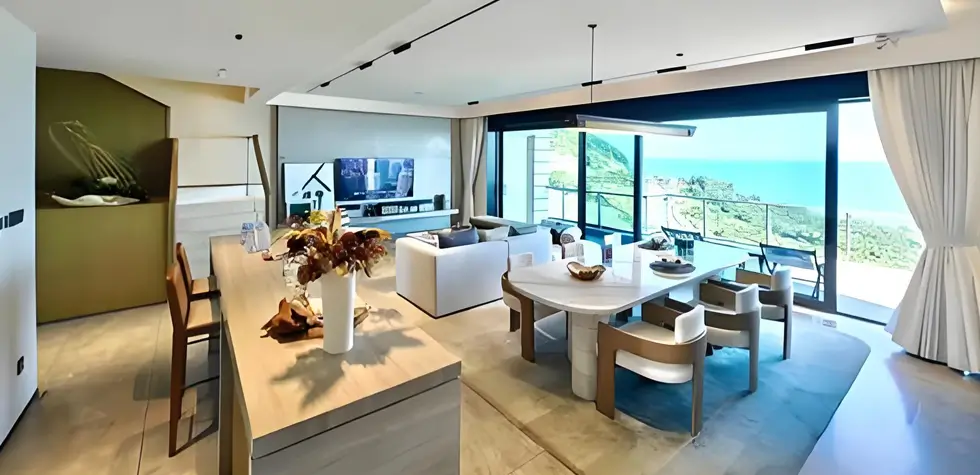
2. Coated Glass: Block UV Radiation & Reduce Salt Deposition
Coastal UV radiation is 20-30% stronger, damaging interiors and causing glare, while strong winds easily lead to rainwater splashing. Low-E coated glass blocks 99% of UV rays (300-400nm) and has a U-value ≤1.2 W/(m²·K), cutting solar heat gain by 35%. Its hydrophobic coating not only repels salt mist, reducing cleaning frequency by 50%, but also improves rainwater runoff, matching the wind and rain resistance of fluorocarbon aluminum to form a comprehensive protective barrier.
Together, these materials lower coastal villa maintenance costs by 45% annually and preserve structural integrity, making them the top choice for luxury coastal properties.